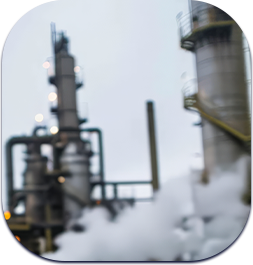
The planning, preparation and execution of a turnaround is a complex undertaking that demands effective strategy, a high degree of control and great attention to detail.
Course Overview
The planning, preparation and execution of a turnaround is a complex undertaking that demands effective strategy, a high degree of control and great attention to detail. It also requires a profound understanding of the critical elements that go into a turnaround and the drivers and constraints that shape the event. This requires involvement at every level of the company from senior management who set the framework for the event through to the craft personnel who perform the actual work.
The shutting down and start-up phases of a turnaround are critical to the success or failure of the event and as such must be planned and prepared in as much detail as the mechanical phase. There comes a point in each area of the turnaround at which most tasks have been completed and the systems may be handed back to operations for start up. This is a critical transition phase and if not properly controlled, time, money and effort can be wasted. Although it may seem to the casual observer that the start-up of the plant is simply the reverse of the shutdown.
There are only two types of work on a turnaround, routine and unexpected. If the routine is under control then in time to deal with the unexpected, but if the routine becomes unexpected then the unexpected may become catastrophic.
Each module offers a practical approach with exercises and examples that draw out and develop participants learning and experience in addition to that offered by the workshop.
ADVANCED MAINTENANCE AND RELIABILITY IN THE PROCESS INDUSTRY
The planning, preparation and execution of a turnaround is a complex undertaking that demands an effective strategy, a high degree of control and great attention to detail.
Course Overview
Achieving advanced maintenance and reliability in the process industry requires a clear strategy, disciplined execution, and a deep understanding of asset behavior in complex operating environments. Today’s plants must move beyond traditional maintenance and embrace predictive, data-driven, and proactive approaches that strengthen performance, reduce downtime, and enhance safety. Reliability excellence depends on alignment across all levels of the organization from leadership setting priorities to technical teams applying modern maintenance methods and frontline personnel executing with precision. Critical phases such as equipment isolation, restoration, and handover must be managed with the same rigor as any major maintenance activity, as these transitions often determine overall success.
In any maintenance program, work falls into two categories: planned and unplanned. When planned work is controlled and optimized, organizations gain the ability to handle unexpected issues without disruption. But when routine tasks become unpredictable, the impact can quickly escalate. This program provides practical tools, real-world examples, and industry focused exercises to help participants strengthen reliability practices and apply advanced maintenance strategies that drive long-term operational excellence.
Water can enter into the pipelines in various ways, either at pre-commissioning phase (hydrotesting) or during commissioning and use.
Course Overview
Water can enter into the pipelines in various ways, either at pre-commissioning phase (hydrotesting) or during commissioning and use. Even if the operating temperature is above the dew point, one must not forget that due to factors such as hot limited to, existing of low points and temperature fluctuation and operation age of the line, water can be collected inside the pipe. It is also interesting to note that as long as water exists (even as water pockets) within the line, the likelihood of both electrochemical and electrochemical-microbial corrosion in the form of internal corrosion, manifested as pitting, will highly increase.
In addition, one has to know that there are two approaches towards microbial corrosion cases “study of the case as per system” and “study of the case as per material”. In other words, if one knows under what conditions for instance carbon steel corrodes by microbes, it doesn’t matter if the system in which carbon steel has been used is, a pipeline or a tank and whether it is in a power plant or a gas refinery.
On the other hand, Hydrotesting (or alternatively, hydrostatic testing) is an industrial practice that is of frequent use in industry. The main characteristic of hydrotesting is that it is a “leak” and “strength” test. There are many factors that can be involved in making a system vulnerable to microbiologically influenced corrosion (MIC). Of the four principle corrosion mechanisms that can be expected to see, MIC is the most probable/ important one in a post-hydrotest failure. Moreover, even pigging is done (intelligent pigging for instance) it is quite possible that it will increase the risk of MIC as well.
CUI is any type of corrosion that occurs due to a moisture buildup on the external surface of insulated equipment. The buildup can be caused by one of multiple factors that are detailed below.
Course Overview
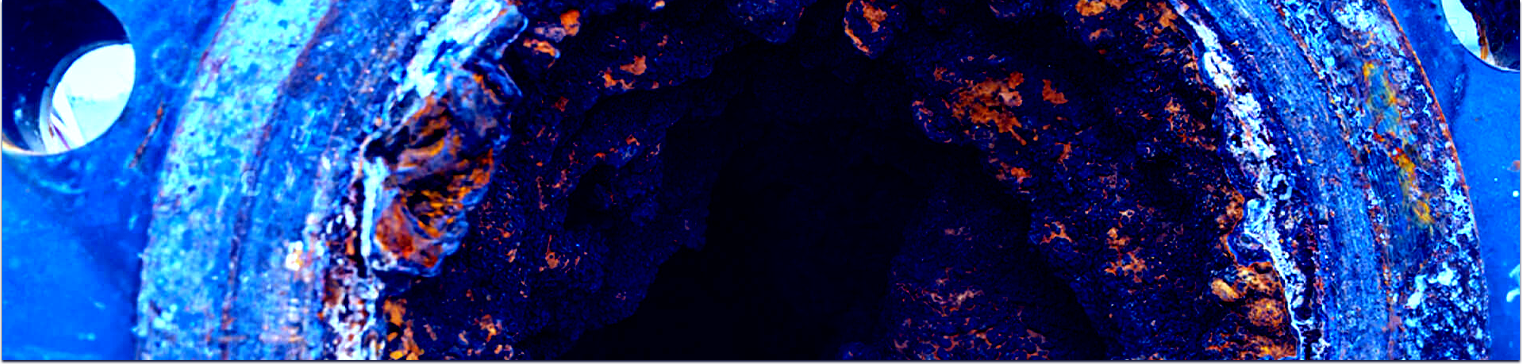
CUI is any type of corrosion that occurs due to a moisture buildup on the external surface of insulated equipment. The buildup can be caused by one of multiple factors that are detailed below. The corrosion itself is most commonly galvanic, chloride, acidic, or alkaline corrosion. If undetected, the results of CUI can lead to the shutdown of a process unit or an entire facility, and in rare cases it may lead to a process safety incident.
Corrosion under insulation (CUI) is a major worldwide problem faced by many industries such as chemical process, food and beverage, oil and gas, refining, petrochemical, power, onshore and offshore industries. A leak can cause safety and environmental concerns. CUI may account for up to 10% of a plant’s maintenance budget. This corrosion course aims to provide the participants with a thorough understanding of the causes of corrosion under insulation and the technical know-how of CUI detection, mitigation and prevention. Upon completion of this short course the participants will be able to identify different forms of corrosion under insulation, analyze the root causes of corrosion failures, apply appropriate methods and strategies for detection, mitigation and prevention of corrosion under insulation.
The role of Maintenance Planner has changed dramatically over the last 10 years with the introduction of complex CMMS and ERP systems that promise to make life easier.
Course Overview
The role of Maintenance Planner has changed dramatically over the last 10 years with the introduction of complex CMMS and ERP systems that promise to make life easier. While the introduction of these new and improved systems has increased our ability to gather and disseminate information, most planners and maintenance managers are starting to understand that their lives have become anything but easier. The quality of the outputs from these systems is reliant on the quality of the inputs and these can only be assured if we have a robust management system to support maintenance, engineering and operations.
If organisations are to move toward an asset management environment with a focus on maximising equipment life, then the planner must be seen more as a whole of life Asset Management Planner rather than the Maintenance Planner of old. More and more the maintenance planner is seen as the champion of “The System” but what has been done to improve his or her understanding of the intricacies of asset management in this new technological age? This course is the starting point for that transition.